


Anthropic just dropped new labor market research that has the internet buzzing.
In a fascinating report released yesterday called Labor Market Impacts of AI, there’s one chart that should make every knowledge worker a little uncomfortable. It maps where AI could theoretically disrupt jobs versus where it’s actually disrupting them right now. The gap between those two lines? That’s either a massive opportunity for founders — or a depressing countdown clock for the rest of us.
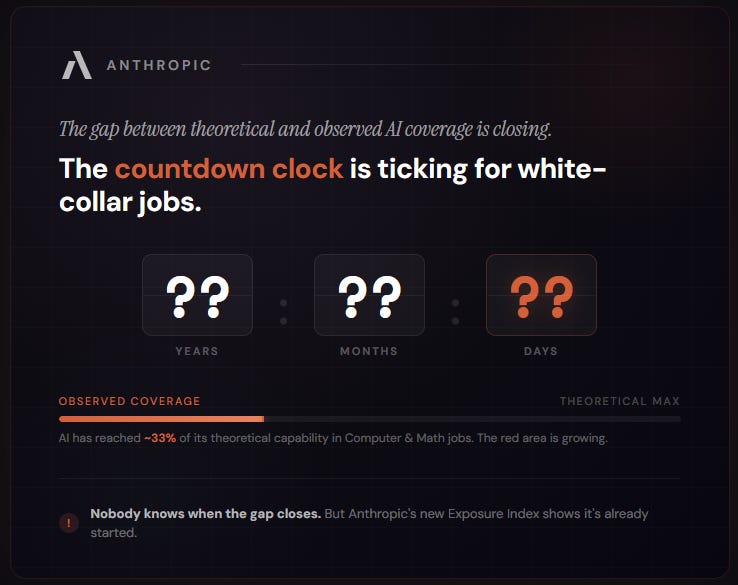
How They Measure It: “Observed Exposure”
This is where the paper separates itself from the usual “AI is coming for your job” slop. Anthropic built a new metric called Observed Exposure. Most prior research just asks “could AI theoretically do this task?” Anthropic is asking something sharper: of those tasks LLMs could speed up, which ones are actually seeing automated usage in professional settings right now?
TLDR: Fundamentally, this is a white collar disruption story. This is coming for the highly educated people who thought their education was a moat. Sadly, it’s not.
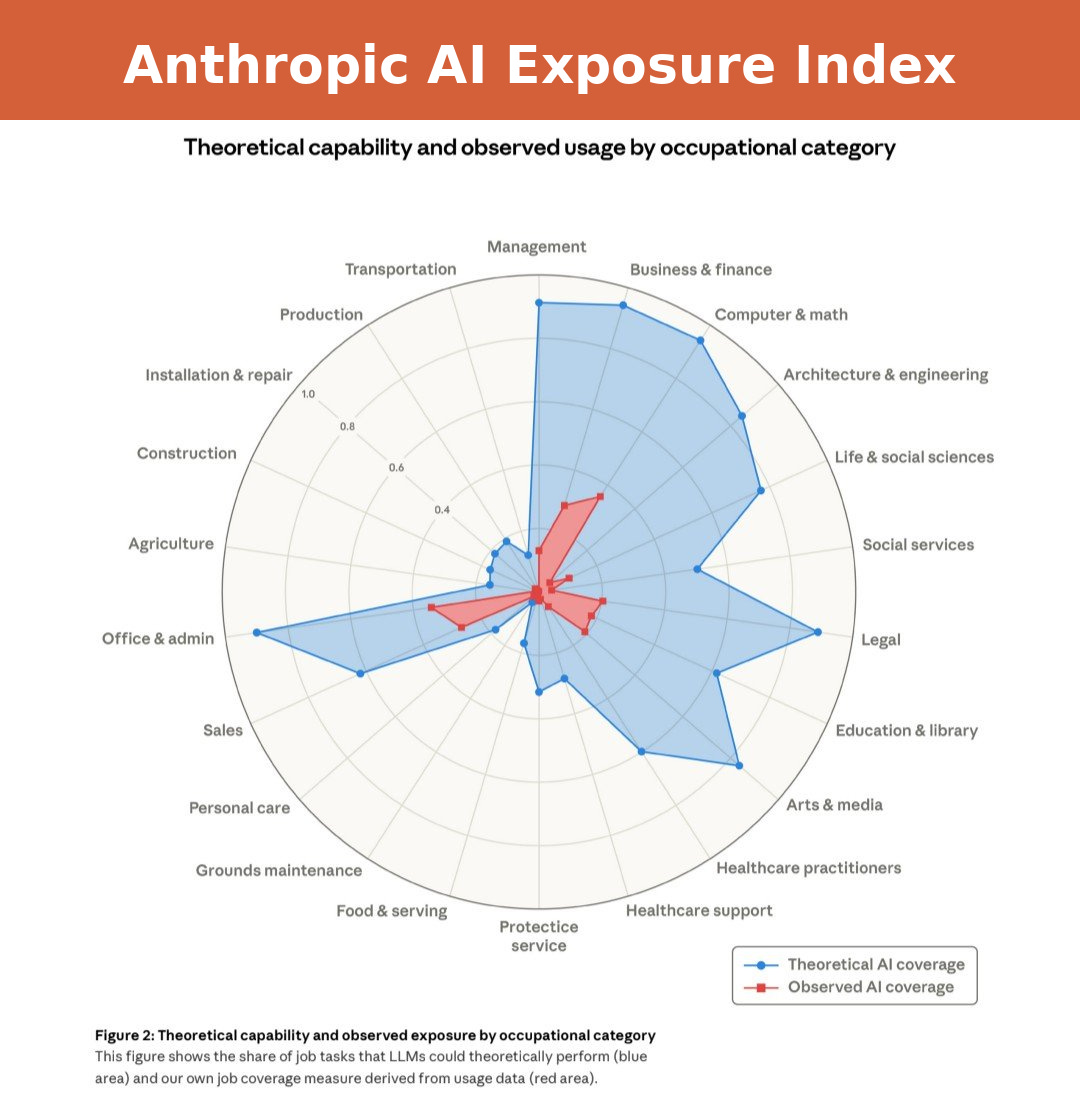
Note: Grounds Maintenance and Agriculture, here I come. There’s something romantic about the idea of driving landmower and getting zero Slack notifications.
Breaking Down the Chart
The gap between the Blue (Theoretical AI Coverage) and the Red (Observed AI Coverage) is the real story.
Theoretical AI Coverage (Blue) = what LLMs could theoretically do.
Observed AI Coverage (Red) what’s actually happening on Anthropic’s platform.
For example - take Computer & Math: 96% theoretical (Blue)… only 32% observed (Red). That means there’s a HUGE amount of disruption runway still ahead.
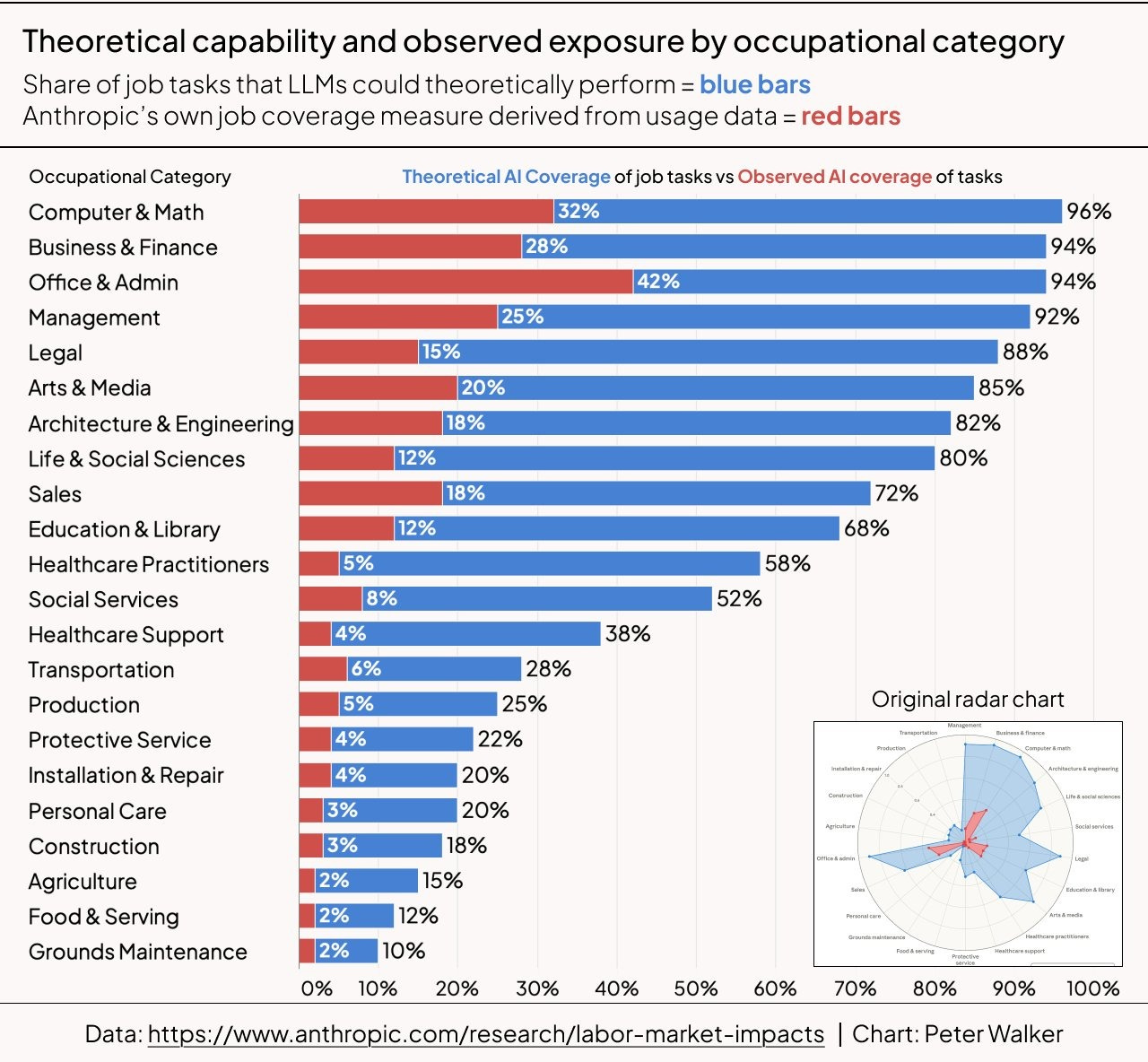
Now look at the bottom. Grounds Maintenance. Agriculture. Food & Serving. Barely a blip @ 2%! Might be time for a career switch - Food Catering here we come!
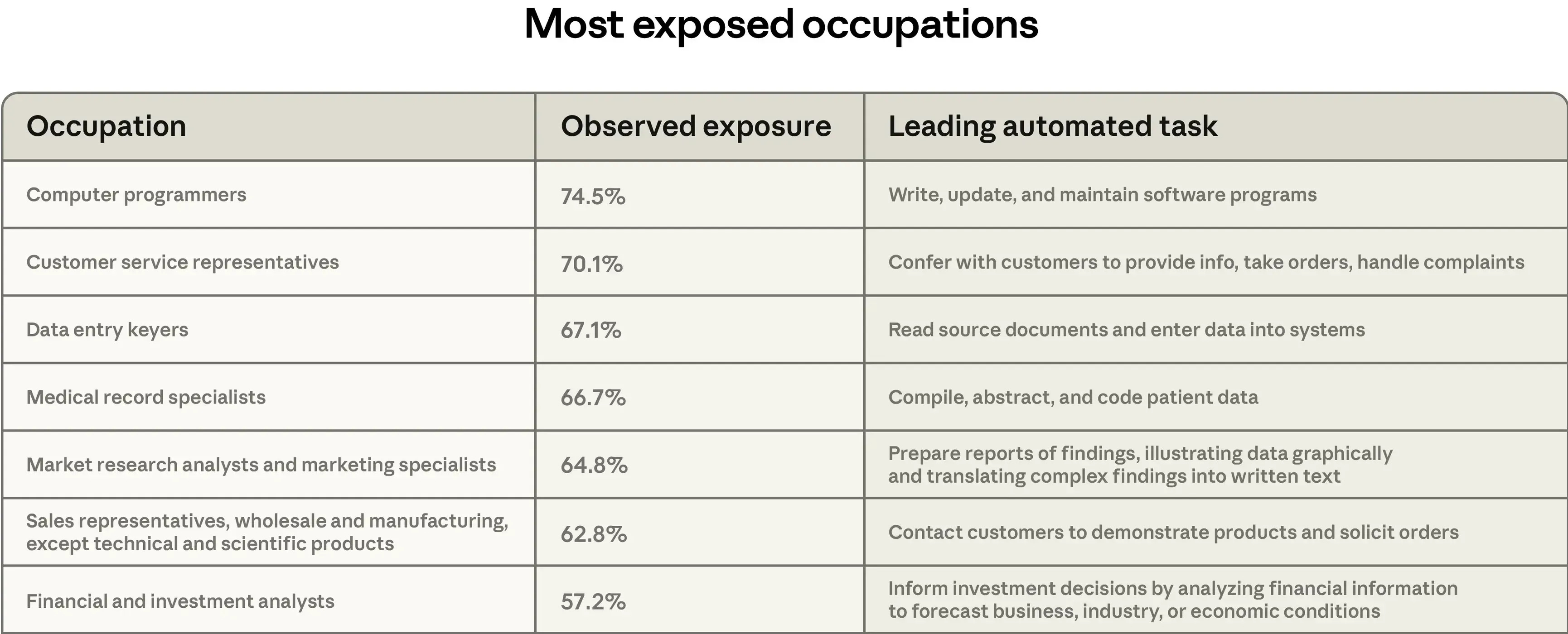
So, who’s Most Exposed?
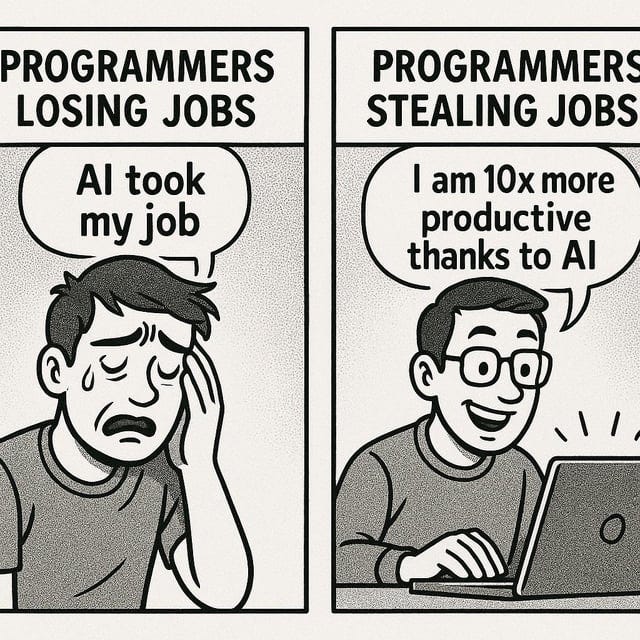
The top three most exposed occupations:
Software Programmers — 75% coverage (no surprise here)
Customer Service Reps— 70% (that CS rep you love? Probably an AI Agent)
Data Entry Analysts — 67% coverage. Time to pack it up.
On the other end, 30% of workers have zero coverage. Their tasks appeared too infrequently in AI usage data to register. This group includes Cooks, Motorcycle Mechanics, Lifeguards, Bartenders, Dishwashers, and Dressing Room Attendants.
(Note to self: Learn how to cook)
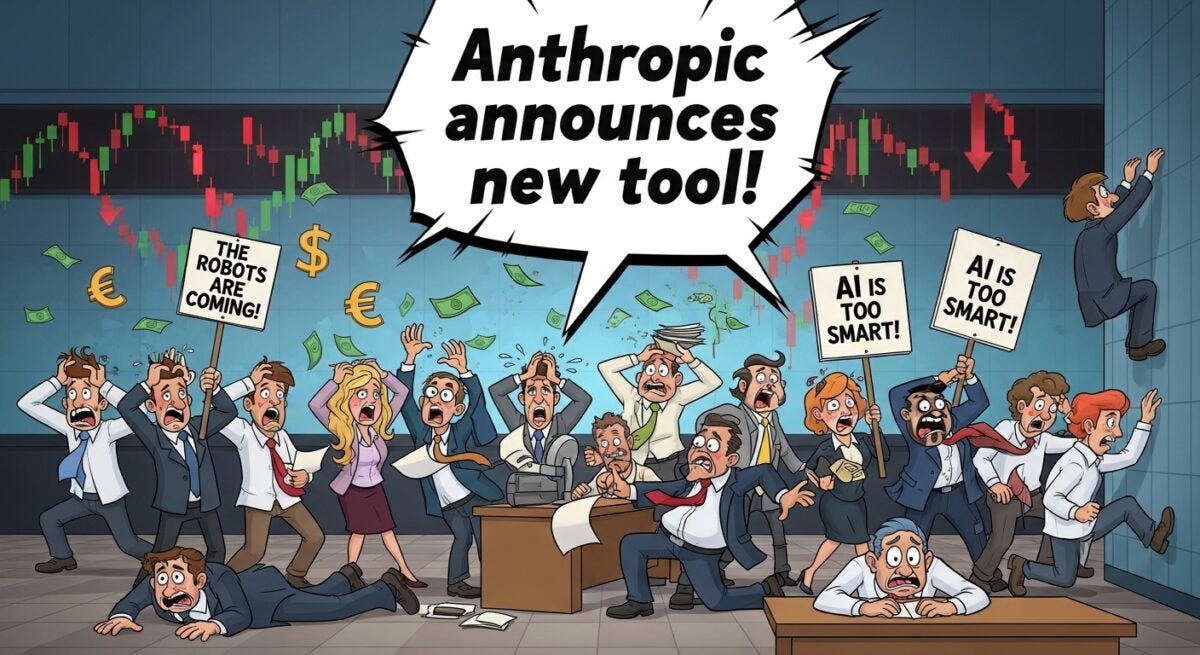
Reality Check: This is not the first-time that Anthropic has caused some market panic. Or the second. Or the third.
The Good News (For Now)
Here’s the thing that keeps this from being a full panic piece: the authors are not finding significant unemployment effects yet.
But here’s the catch: they found suggestive evidence that hiring of younger workers (ages 22-25) has slowed in exposed occupations — about a 14% drop in the job-finding rate for young workers entering high-exposure jobs. The entry-level pipeline is narrowing before the layoffs even show up. That’s a troubling trend.

That’s the pattern to watch. AI might not fire you. But it might mean the company doesn’t hire your replacement. Or your child can’t get that first job out of school.
Bottom Line
Every founder should be staring at the categories where blue dwarfs red and asking: what’s the product that closes that gap?
Every worker should be looking at where they sit on this chart and thinking honestly about their future career trajectory.
And every policymaker should be struggling with the fact that the most exposed workers are the ones who did everything “right” — got educated, got office jobs, climbed the ladder. It’s a depressing fact for people like me —> VCs might be cooked (unless you ask Marc Andreessen 😂).
The full paper is available from Anthropic’s research page, and the underlying data is on Hugging Face. Happy Friday friends.
Disclaimer: The information contained in this article is not investment advice and should not be used as such. Views expressed are my own and should be considered as such, and are not the views of NextEra Energy Investments (NEI) or NextEra Energy (NEE: NYSE).