


First Citizens Bank Acquires SVB
Before this week, the only thing I knew about First Citizens Bank was that it’s the stadium of the Philadelphia Phillies, a pro baseball team in Philadelphia. Yet seemingly overnight, First Citizens has been thrust into the national spotlight after news broke it had purchased the remnants of the collapsed Silicon Valley Bank.

With MLB Opening Day kicking off today, the parallel seems fitting. The Phillies are a moderately successful team, having won two World Series titles (mostly recently in 2008), and even finishing as runner-up to the 2022 World Champion Houston Astros. So if Citizens Bank is anything like the team that it sponsors, SVB clients should expect to be in good (if unspectacular) hands going forward.
But while Citizens Bank Park, a 43,500-seat stadium in the city of brotherly love, opened in 2004, First Citizens itself was founded all the way back in 1898. So how is it that a century year old bank with over $109 billion in assets is largely unknown outside of its home state of North Carolina?
Luckily for you, I break down everything you need to know.
Who is First Citizens Bank?
Before we dive into the details of the merger, let's first peel into First Citizens Bank. Founded in 1898 by Allen W. Smith in Raleigh, NC, First Citizens has a long and rich history that spans 125 years. Initially started as Bank of Smithfield, the business merged with Citizens National Bank in 1921, and later renamed itself First Citizens Bank and Trust Company approximately eight years later.
A Family Controlled Bank
For three generations, the bank has been led by the family of Robert Powell Holding, who joined the bank in 1918 and rose to president in 1935. It is currently led by the grandson of Robert Powell, Frank B. Holding Jr., who has served as CEO since 2008.
Key Executives:
Frank B. Holding Jr. (Chairman and CEO)
Hope Holding Bryant (Vice Chairwoman)
Peter M. Bristow (President)
Lorie K. Rupp (Chief Risk Officer)
Craig L. Nix (CFO)
Previous M&A Activity
Although this deal may come as a surprise to some, First Citizens Bank is no stranger to acquiring regional banks. In fact, the Raleigh-based bank has acquired over 25 banks by merging or purchasing them after a collapse since the 2008 housing crisis.
First Citizens has a history of [acquiring] troubled banks. It’s a strategy to grow the bank when times are difficult — to conduct M&A at advantageous prices. ~ Herman Chan, Bloomberg Intelligence Analyst, via Bloomberg News.
Notable Banks Acquired by First Citizens Since 2009
Temecula Valley Bank of Temecula, California: Acquired by First Citizens in July 2009.
First Regional Bank of Los Angeles, California: Acquired by First Citizens in January 2010.
United Western Bank of Denver, Colorado: Acquired by First Citizens in January 2011.
First CornerStone Bank of King of Prussia, Pennsylvania: Acquired by First Citizens in May 2016
Harvest Community Bank: Acquired by First Citizens in January 2017.
Community Financial Holding Company, Inc. and Gwinnett Community Bank: Both financial institutions merged with First Citizens in February 2020.
CIT Group: Was acquired by First Citizens in January 2022, for $2.2 billion.
Silicon Valley Bank: Acquired by First Citizens from the FDIC following its collapse in March.
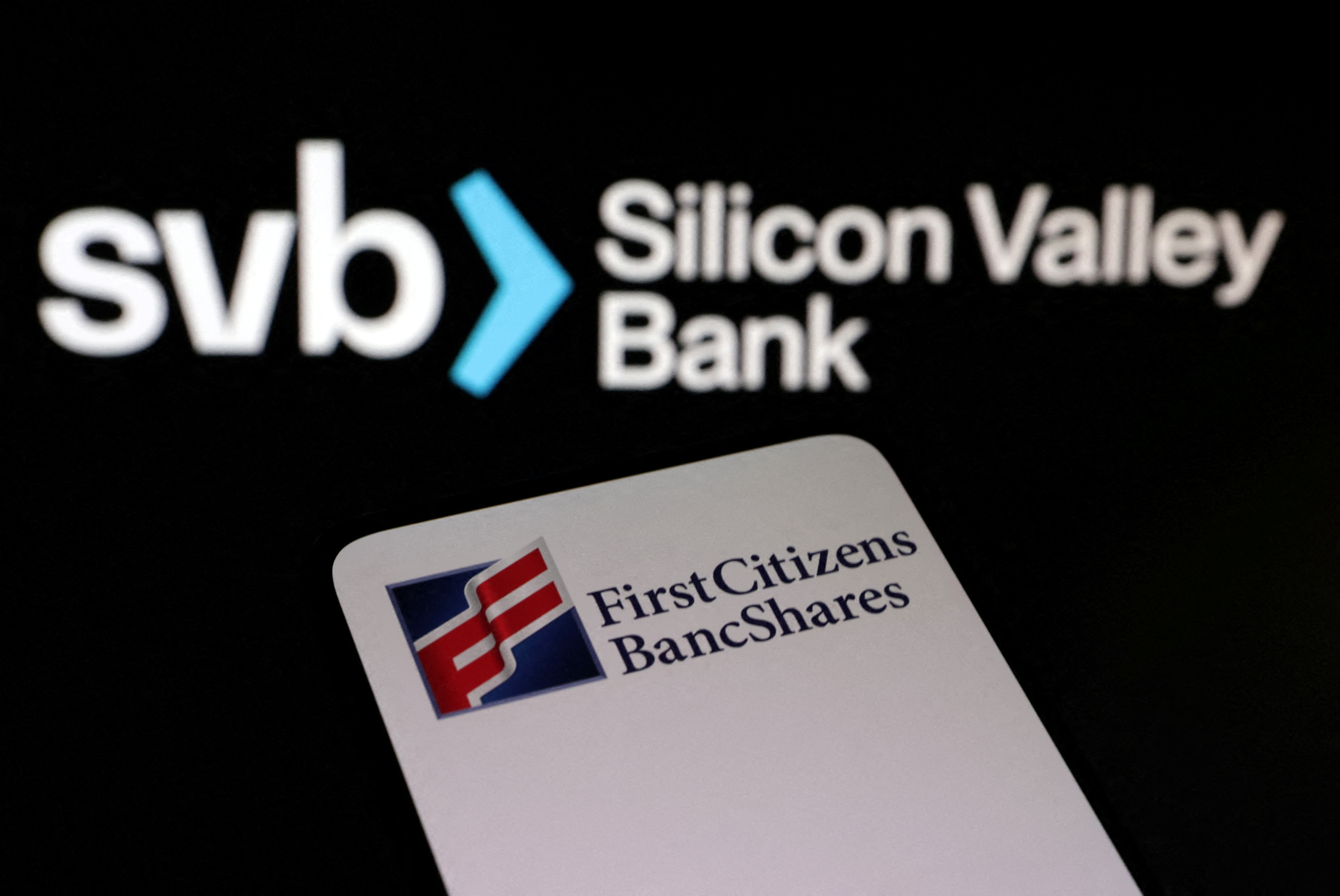
SVB is now a division of First Citizens Bank
Now let’s jump into the details. On Sunday March 26, the FDIC announced that First Citizens BancShares, Inc. (Nasdaq: FCNCA) will purchase all of the assets and liabilities of Silicon Valley Bridge Bank, N.A. The transaction is structured as a whole bank purchase and assumption agreement with loss share coverage.
The 17 former SVB branches reopened under the First Citizens brand on Monday, and all SVB depositors will become depositors of First Citizens, according to a FDIC press release. Customers of Silicon Valley Bridge Bank, N.A., should continue to use their current branch until they receive notice from First Citizens that its completed its integration to allow full–service banking at all of its branch locations.

Deal Impact
First Citizens had $109 billion in assets at the end of 2022, making it one of the country’s largest regional banks. But despite this, First Citizens is still relatively unknown nationally, likely because more than 50% of its deposits in 2021 were in North Carolina, per its annual report. But based on recent comments from its CEO, it seems to be ready to expand beyond its regional roots.
Speaking to investors on Monday 3/27, CEO Frank Holding Jr. told investors that he hoped the acquisition would bolster the bank’s standing with technology clients and create new opportunities for growth.
While I know First Citizens is not well known for expertise in the digital innovation economy, our home market Raleigh is ranked second behind Silicon Valley in terms of commercial real estate growth in the innovation market over the past two years. ~ Frank Holding Jr., First Citizens Bank CEO
Before this deal was announced, SVB’s fate had largely been kept in a state of limbo since its collapse. For the past several weeks, the FDIC had attempted to sell Silicon Valley Bank and SVB Private together, but failed to come to an agreement. In the initial unsuccessful auction held on Sunday March 12, none of the largest US banks made a bid, and the one offer that was made — by another unknown buyer — was somewhat puzzlingly rejected by the FDIC, per numerous reports.


But now that we have a deal, there are impactful ramifications for both the banks involved, their clients, and the entire banking system as a whole.
Below are my top 10 key takeaways about the Silicon Valley Bank-First Citizens Bank merger:
10 Things to Know about the First Citizens-Silicon Valley Bank Deal
What’s included: First Citizens will assume $56.5 billion of deposits and $72.1 billion of loans from Silicon Valley Bridge Bank, NA (currently held by the FDIC), the latter of which came with a $16.5 billion discount.
What’s not included: The FDIC will retain approximately $90 billion of SVB assets, most of which consists of its long-dated securities portfolio. The FDIC also retains SVB’s venture capital investment portfolio.
What the FDIC receives: The FDIC received equity appreciation rights in First Citizens BancShares, Inc., Raleigh, North Carolina, common stock with a potential value of up to $500 million.
First Citizens and the FDIC also entered into a loss-share agreement of up to 50% on loan losses in excess of $5 billion. FDIC estimates that SVB will cost up to a $20 billion loss from its Deposit Insurance Fund (which is funded by insured banks, not taxpayers).
Investor reaction was largely positive. First Citizens shares jumped more than 53% during Monday 3/27 trading on Wall Street.
First Citizens entered 2023 as the 30th largest bank in the United States. After absorbing most of what had been the 16th largest bank, it now has more than $218 billion in assets and more than $144 billion in total deposits.
With this combination, First Citizens Bank will have more than 500 branches across 23 states.
The two banks have complementary strengths, with First Citizens having a strong presence in the Southeast, and SVB having long been a major player in the tech and venture capital scene in its namesake Silicon Valley region.
The deal is a major win for First Citizens, as the transaction will allow it to expand its presence on the West Coast, increase brand awareness, and acquire a strong asset at a sizable discount.
First Citizens has a history of acquiring banks. Last year, First Citizens acquired CIT Group (which itself bought OneWest in 2015) in a $2 billion deal. Over the past decade, First Citizens has acquired more than 25 community banks.
Key Takeaways
The first quarter of 2023 has been a stressful time for US banks. SVB’s collapse sent shockwaves across the banking system and was cited as one of the catalysts for the subsequent crisis of Swiss banking giant Credit Suisse, which eventually led to an emergency rescue by domestic rival UBS. First Republic shares plunged 47% to a new record low on Monday 3/20, amidst worries over its increasingly fragile liquidity position. As covered in my previous post, it’s wild times for First Republic, and JPMorgan continues to advise the bank on strategic alternatives.

For these reasons and more, the successful sale of SVB is a step toward stabilizing America's regional banking sector after a month of tumult.
Given its location, expertise and heritage SVB has a deep history of serving some of the most innovative new companies in the world. It will be critical for First Citizens to do whatever it can to preserve these strong client relationships in order for the transaction to be successful.
Overall, this is an exciting time for both banks, and it will be interesting to see how the merger plays out. As always, I'll be keeping a close eye on this story and providing updates as more information becomes available.
Until next time,
Brian Sykes